
Hi friends! After years of helping families turn houses into actual homes, I’ve noticed something: the most beautiful rooms on Instagram often feel strangely unlivable once you step into them. You know the ones — perfectly styled, everything color-coordinated, zero signs of human life.
As an interior decorator, my goal is always the opposite. I want rooms that look wonderful in real life: comfortable, functional, and still photogenic when the moment is right. Today I’m sharing my favorite tried-and-true strategies for designing spaces that work beautifully for daily living.
Prioritize Comfort and Movement First
The biggest mistake I see is designing for the camera instead of how people actually move through a space. Leave breathing room between furniture. Choose sofas you can actually nap on and chairs that don’t punish you after twenty minutes.
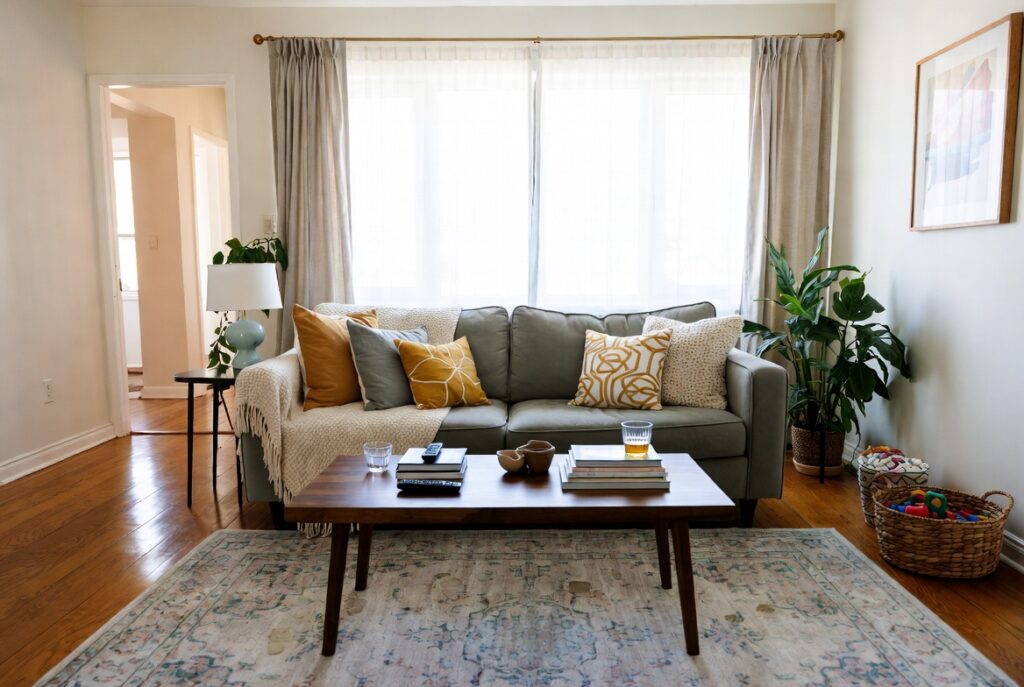
In the living room above, notice how the layout supports real life — easy traffic flow, surfaces for setting things down, and seating that invites you to stay. It looks cozy and collected, not staged.
Embrace Texture Over Perfect Color Matching
Instagram loves flat, matchy-matchy palettes. Real life loves layers you can feel. Mix rough with smooth, matte with a touch of sheen, old with new.
Think linen, wool, wood, ceramic, and some brass or leather. These textures catch light naturally throughout the day and hide the inevitable signs of life (fingerprints, pet hair, the occasional spill).
Design for How You Actually Live
Ask yourself honest questions: Where do you drop your keys? What time of day do you use this room most? Do kids or pets frequent this space?
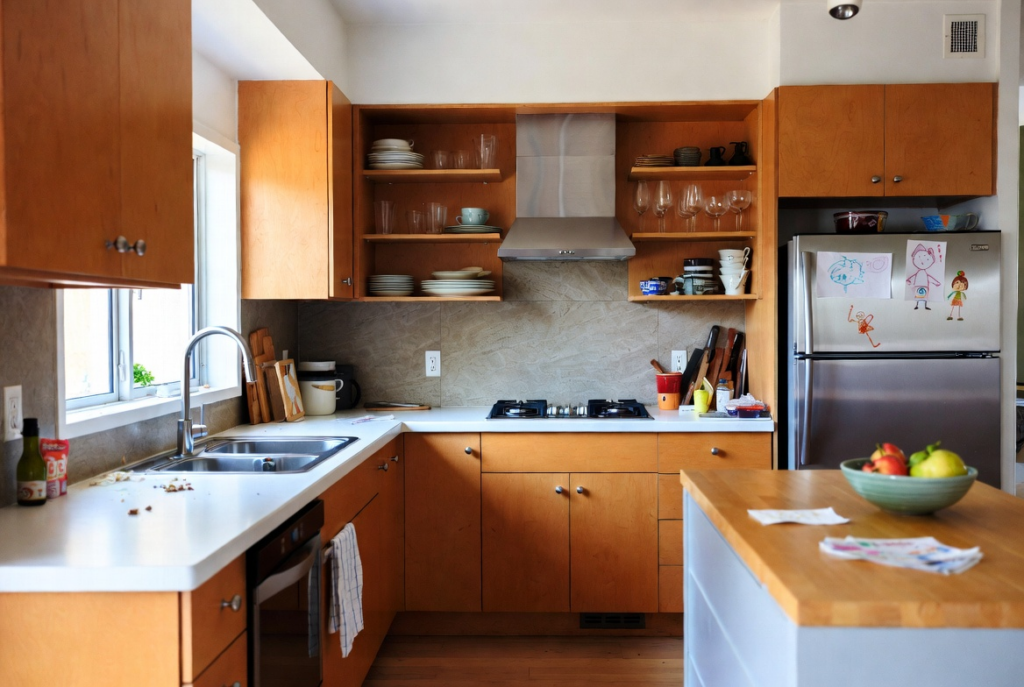
The kitchen in the second photo works because it’s designed around real routines — plenty of counter space for actual cooking, visible storage for daily items, and personality through personal touches like kids’ art. It still looks warm and inviting.
Let Lighting and Imperfection Do the Heavy Lifting
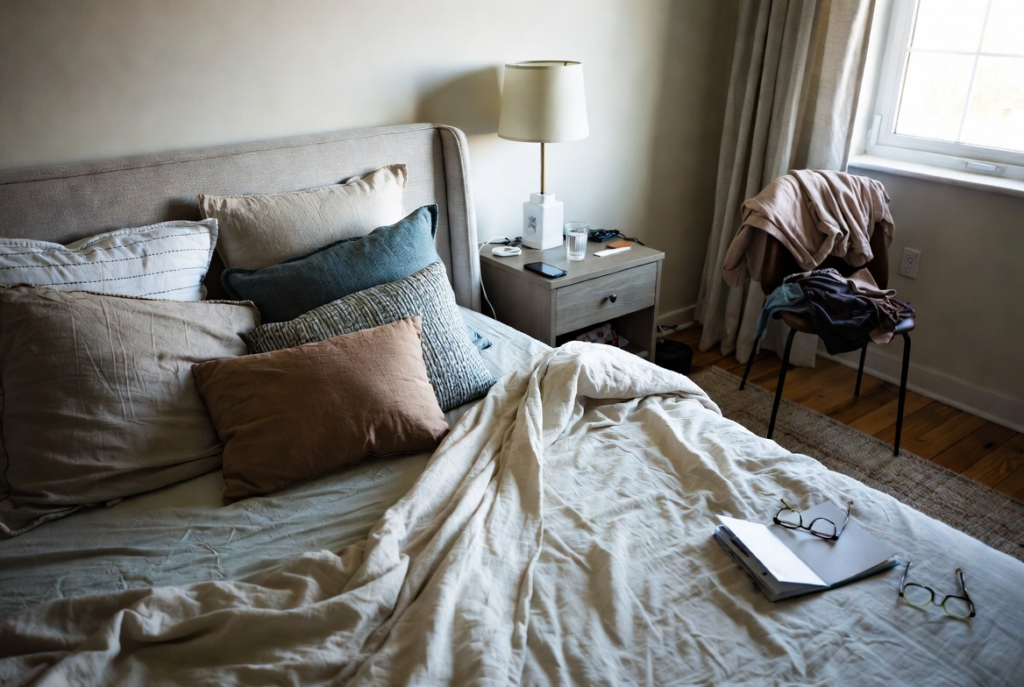
Layer your lighting: natural daylight, warm ambient lamps, and task lighting. And please, let the room breathe a little. A slightly rumpled throw, a stack of books, or a lived-in chair adds soul that no perfectly styled vignette can match.
The bedroom above feels peaceful and personal precisely because it doesn’t look “perfect.” That’s the goal.
Final Thoughts
Designing for real life doesn’t mean settling for less beauty — it actually creates deeper, more lasting beauty. Rooms that look good at 7am with coffee spills, at 9pm with toys on the floor, and in golden hour photos are the ones you’ll love for years.
My best advice? Style for the way you live, then take photos when the light is nice and the laundry is (temporarily) put away. Your home will thank you.
Which room are you working on right now? Tell me in the comments what “real life” challenges you’re facing — I read every one and love brainstorming solutions with you.
Here’s to homes that feel as good as they look, — Your practical interior decorator who’s obsessed with livable beauty