
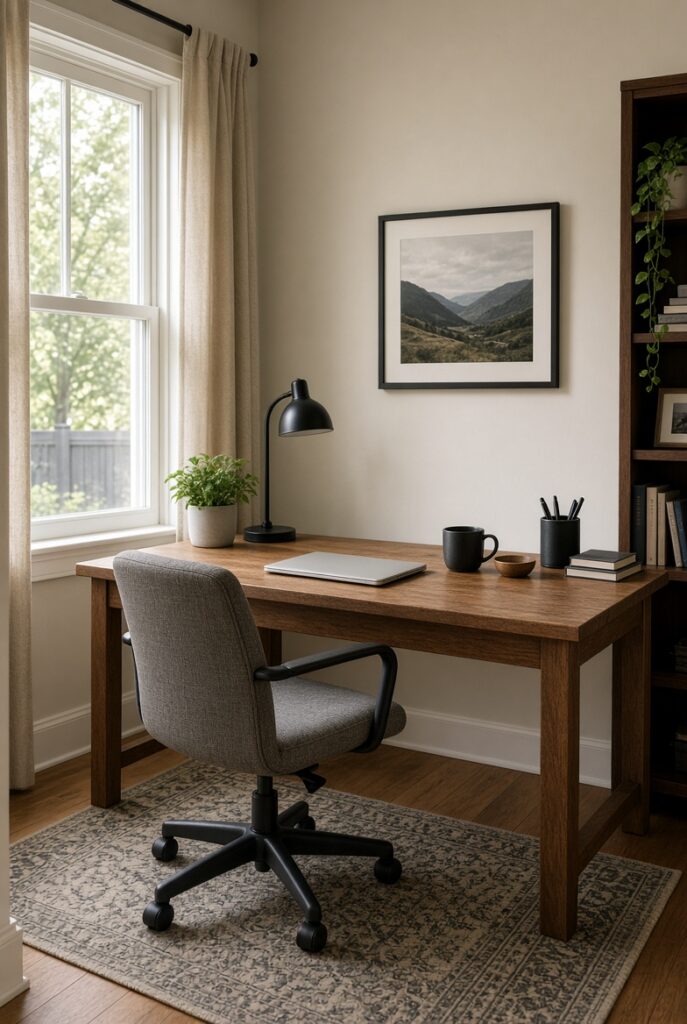
By Vincent Van Duysen, The Quiet Minimalist
Witty, irreverent, fun. He makes you laugh while making you think about your lamp.
Hey friends! A home office should do more than hold a laptop. In 2026, the best ones quietly support clear thinking — fewer distractions, better light, and a sense of calm that lets ideas come through. You don’t need a big renovation or expensive gear. Small, intentional choices can turn almost any corner into a space that helps your mind work better.
Here’s how to design a home office that actually supports clearer thinking.
Clear the Visual Noise First
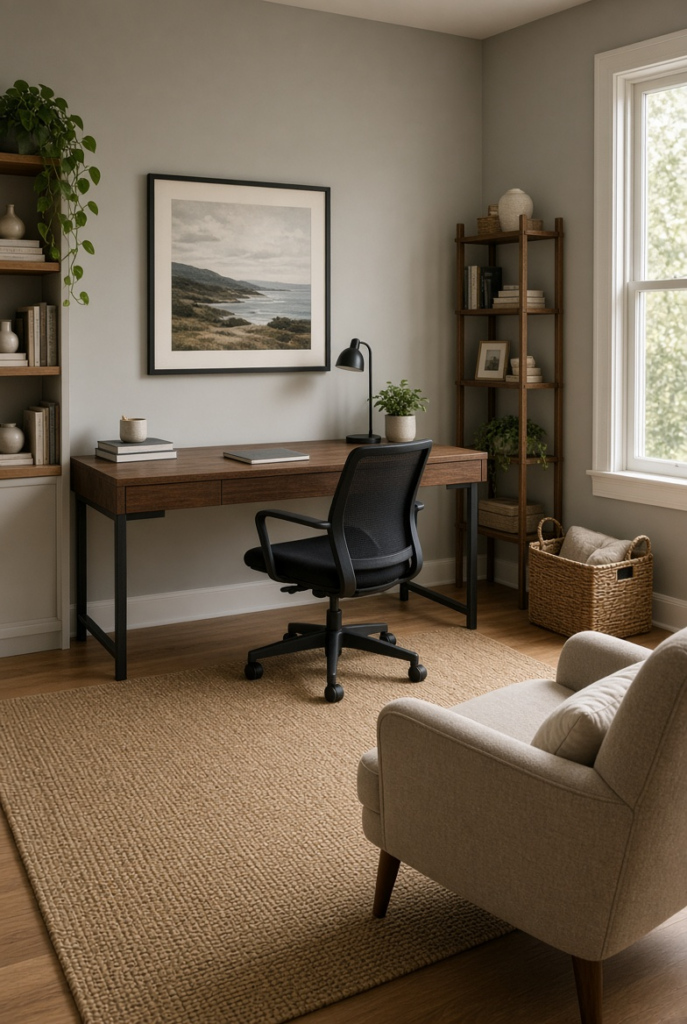
Clutter is the enemy of focus. Start by removing everything that doesn’t belong on or near the desk. Keep only the tools you use daily and a few meaningful objects. Open surfaces and empty wall space give the eye (and the mind) somewhere to rest between tasks.
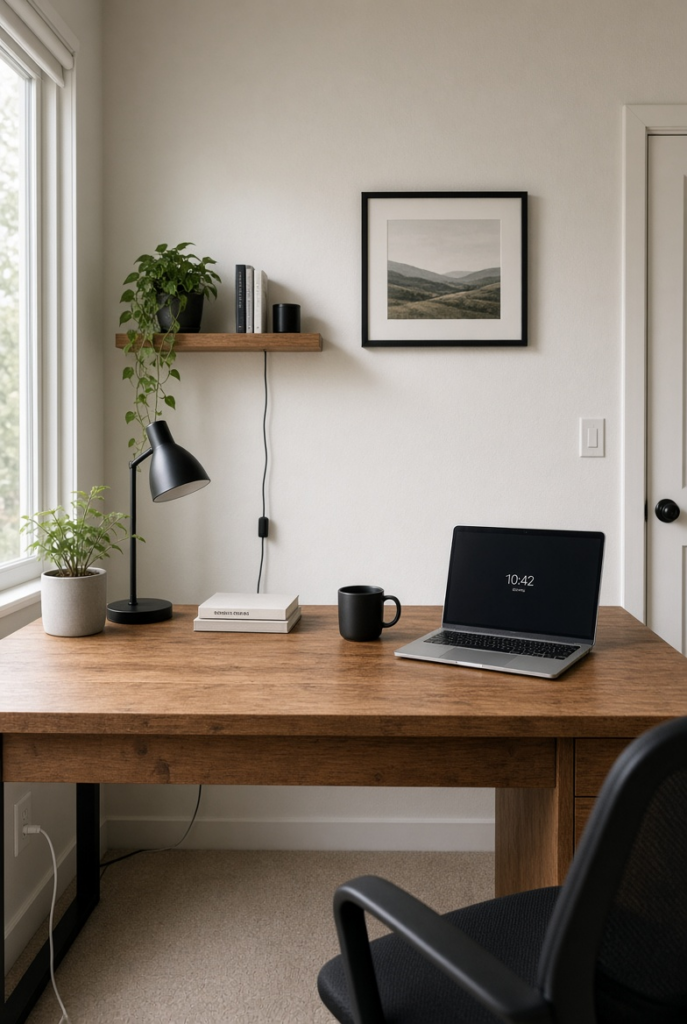
Let Natural Light Lead
Position the desk so daylight falls across the work surface without creating glare on the screen. Soft, consistent light reduces eye strain and keeps energy steadier throughout the day. If the room is dim, add a simple lamp with warm light rather than harsh overhead fixtures.
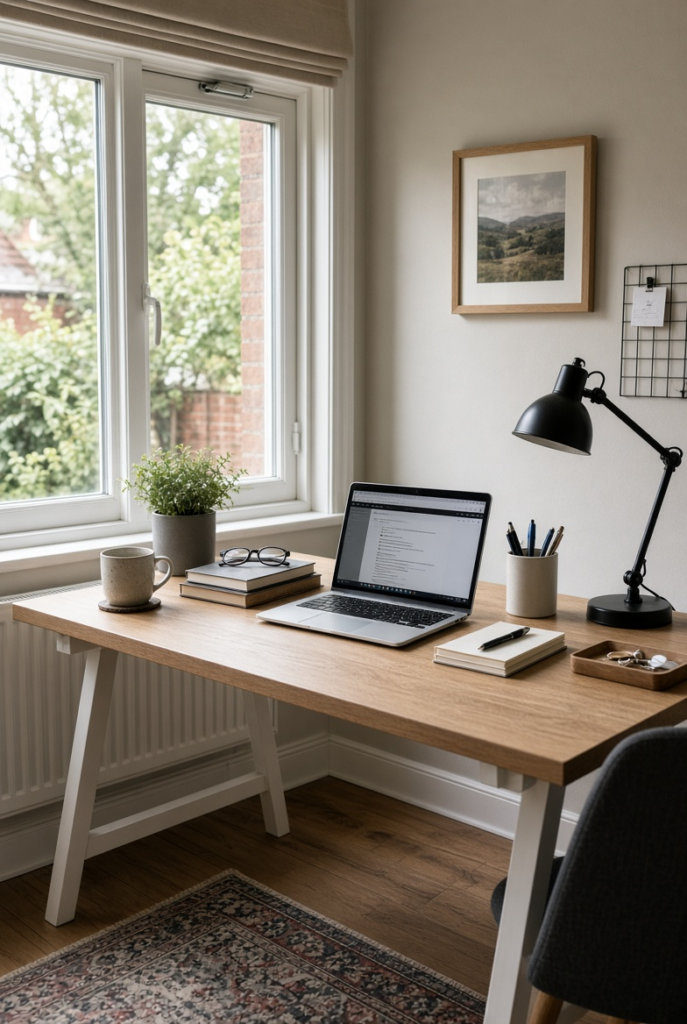
Choose Furniture That Supports the Body
A comfortable chair and a desk at the right height matter more than style. Look for simple, sturdy pieces in natural materials — wood, linen, or soft upholstery — that feel good for long periods. When the body is supported, the mind has more room to focus.
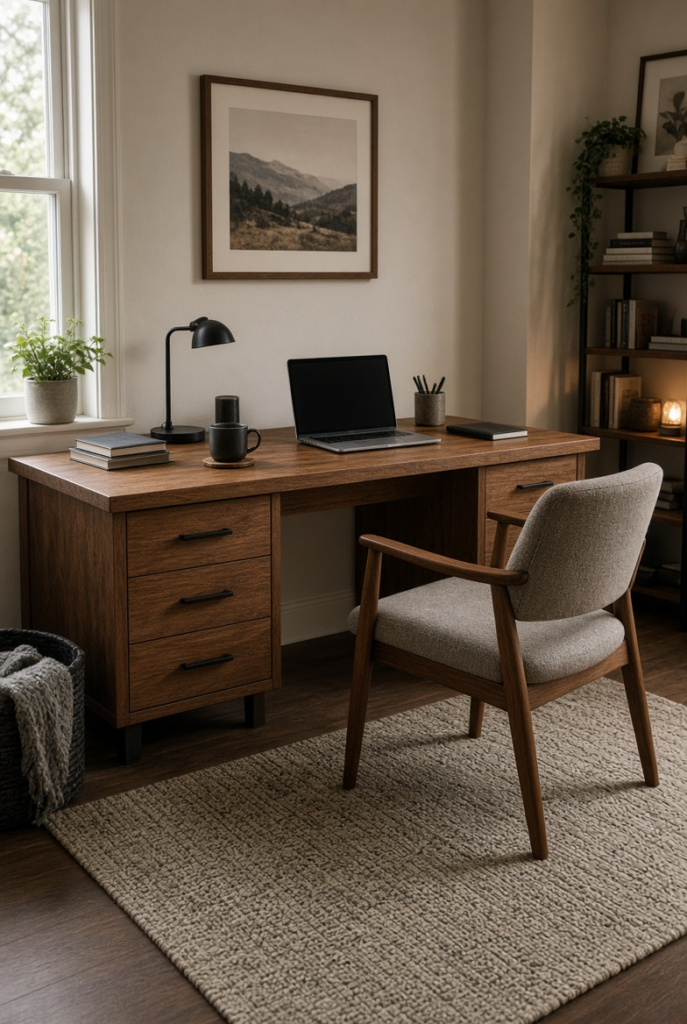
Keep Materials Quiet and Tactile
Soft neutrals, natural wood, and simple textiles create a calm backdrop. Avoid busy patterns or high-gloss surfaces that bounce light and attention. A linen curtain, a wool rug, or a wooden tray can add quiet texture without visual noise.
Create a Gentle Boundary
Even in a small apartment, a sense of separation helps. A simple screen, a rug that defines the zone, or just consistent materials can signal to your brain that this is work space. When the boundary is clear, it’s easier to both enter focus and leave it at the end of the day.
A home office that helps you think more clearly doesn’t need to look impressive. It needs to feel steady, well-lit, and free of unnecessary demands. When the space is quiet, the mind often follows.
What’s one change you’ve made (or want to make) in your work space that improved focus? Share in the comments — I’d love to hear what works for you!
With clearer desks and quieter minds, friends! 🪑